Gelatin Silver
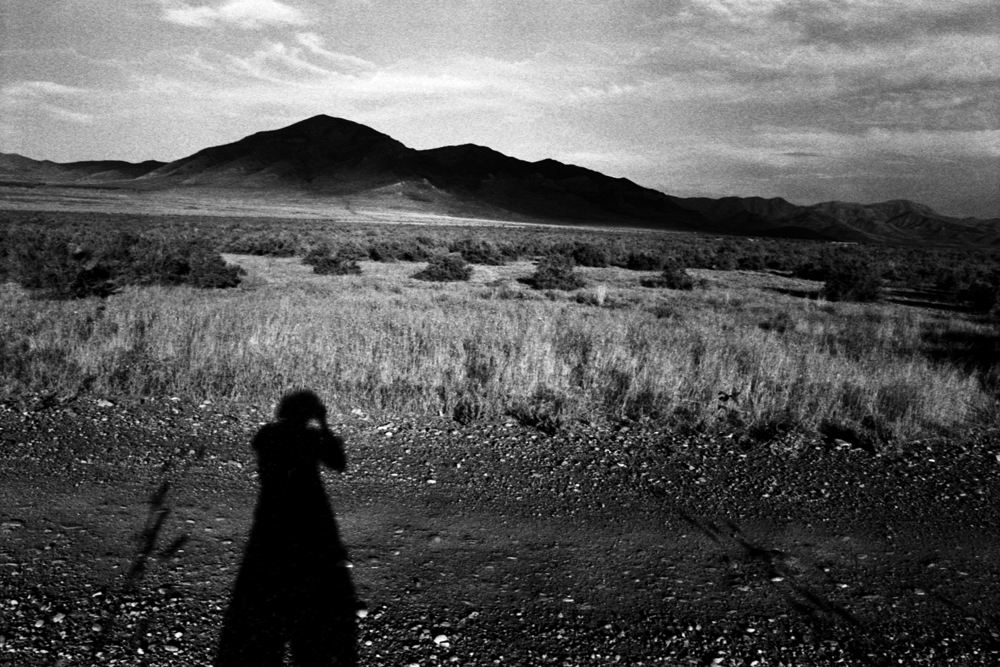
Gelatin silver was introduced in 1871 by Richard Leach Maddox, leading to wide commercial use as a shelf-stable, long-lasting photographic paper that dominated both the commercial and fine art printing markets for over a century. The paper consists of a layer of gelatin with silver halides suspended within it. The paper is exposed to a negative (via contact printing or enlargement) and then developed using oxidizers to cause the silver to tarnish in places, creating a monochrome black and white image.
It is perhaps the most familiar photographic printing technique and is arguably not an alternative process because it is still used and not yet completely out of favor. Luminaria works with it because we want to keep it from becoming completely alternative and it has many favorable aesthetic traits.
Gelatin Silver Workshops

Luminaria's Capabilities
Digital negatives
Though gelatin silver does not require contact printing (meaning the negative is not enlarged but printed 1:1 on the paper) it is our preferred printing method. With calibrated digital negatives we can take any of your digital images and output the perfect negative for your final print. Print sizes are dependent upon the file size of your digital image. Do you have a negative to print? No problem. We can scan it for digital negatives and go from there..
Precise tonal range
Our calibrated digital negatives are designed to take advantage of gelatin silver’s versatile tonal range. Aesthetically, prints in this process can be beautiful in high-contrast, low-contrast, a compressed tonal-range, or a wide one.
Paper options
Gelatin silver paper is still widely produced with many different options from the surface quality to the tone. We are not loyal to a brand but have experience we use to pick the right type depending on the client’s criteria. We can help you decide which is best for you and source the right type for your aesthetic needs.
Sizes
Our exposure unit allows us to print up to 24x36 inches.
Prices
Our pricing is based on materials costs and your customization requirements. Because of this we can only provide a basic estimate of pricing on our website. Contact us to discuss your needs or schedule an appointment to visit our lab and samples.
8x10 | $75
11x14 | $140
16x20 | $200
inquire about larger sizes
Workshops
Interested in another type of class? Here are some of our previous offerings. Join our mailing list at the bottom of the page to stay up-to-date on our workshops. Or, schedule and On-Demand Workshop tailored to your needs.

This session has passed. Join our mailing list to receive news on current and future workshops.
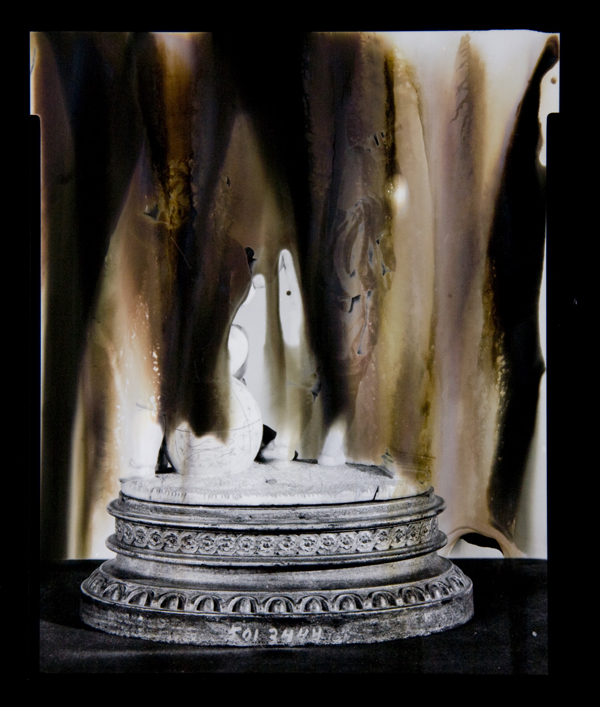
Liquid Light is a silver-gelatin liquid emulsion that can be painted onto paper, cloth, stone, wood, and other substrates. If applied correctly, photographs can be printed onto the substrate with an enlarger or through contact printing. In this mini-workshop you will learn how to prepare a tile for Liquid Light emulsion and print onto it. The print can be a photogram (using an object as the negative) or from digital negatives of digital images. You are encouraged to bring your own objects for photograms. If you would like to use a digital image for a nominal fee, you can email us your image prior to the class so we can have it ready to go.
This session has passed. Join our mailing list to receive news on current and future workshops.
This relatively new process (introduced in 1991) is great for exploring the limits of gelatin silver printing. This workshop will introduce basic gelatin silver printing using digital negatives, discuss the principles and chemistry underlying the chromo process, and allow for hands-on printing time to explore the technique. The chemicals primarily affect the white portions of an image so a high-contrast photo with white space will work best. Students are encouraged to submit 2 images for digital negatives or to use the photogram technique.
Saturday, November 23, 1-4pm
6 students max
$50
When you think of the important things you can’t live without, what comes to mind? Photographs of loved ones, life’s important events, and those silly moments we want to hold onto forever come to ours. With the holidays around the corner, this is your opportunity to make these memories tangible as gelatin silver mini-prints. Join us for an afternoon in the darkroom making classic black and white photographs that will last a lifetime. Participants will make 4 5x7 prints of their own digital images utilizing our calibrated digital negatives and gelatin silver photographic paper. Experience darkroom printing and the magic of an image appearing before your eyes in this Crafernoon!
Participants will make their prints using the contact-printing technique and calibrated digital negatives. This allows us to print any digital file as a traditional gelatin silver print instead of using film. Gelatin silver printing utilizes commercially-produced light-sensitive paper with a classic black and white aesthetic. This mini-workshop is for anyone new to chemical photography and those interested in learning a new technique for making gelatin silver prints.

This session has passed. Join our mailing list to receive news on current and future workshops.
Instead of negatives, photograms use objects to block light from a light-sensitive emulsion. They are simple, design-oriented images that can be as minimal or ornate as you like. In this mini-workshop we will use cyanotype and gelatin silver paper to make photograms with found objects, pressed-plants, and our bodies. You are encouraged to bring your own objects for photograms.

This session has passed. Join our mailing list to receive news on current and future workshops.
A pinhole camera is a light-tight box with a pinhole for a lens. It takes unique photographs that are dreamy and imperfect. In this mini-workshop you will make a pinhole camera and use it to shoot gelatin silver negatives in our studio or around the neighborhood. We will provide basic camera materials but you are encouraged to bring your own object to turn into a pinhole camera.